Nickel‑iron (NiFe) alloys are used in critical electronic applications where
controlled thermal expansion and
reliable glass‑to‑metal sealing are essential. This includes lead frames for AI data centers and hermetically sealed integrated circuits. By bridging thermal expansion differences between dissimilar materials, nickel‑iron alloys help maintain long‑term hermetic integrity during temperature cycling.
What Are the Advantages of Nickel‑Iron Alloys?
Our NiFe strip and wire are manufactured to
ASTM F30 standards and deliver very low and highly controlled coefficients of thermal expansion (CTE). As a result, they prevent cracking or seal failure during temperature changes, ensuring long‑term reliability.
- Low gas content reduces the possibility of outgassing over time
- Thermal expansion properties consistent with cast product
- Significantly low levels of surface oxides reduce die wear
- Controlled chemistry ensures superior glass sealing characteristics
Which Nickel‑Iron Alloy Grades Are Available?
We offer a wide range of nickel‑iron alloy grades that can be
customized to meet specific thermal, mechanical, or
application requirements.
Nickel‑Iron
AMETEK Grades |
Nickel‑Iron
Industry Equivalent |
| 936 |
Alloy 36 (Invar®) (UNS K93600) |
| 942 |
Alloy 42 (UNS K94100) |
| 946 |
Alloy 46 (UNS K94600) |
| 948 |
Alloy 48 (UNS K94800) |
| 952 |
Alloy 52 (UNS N14052) |
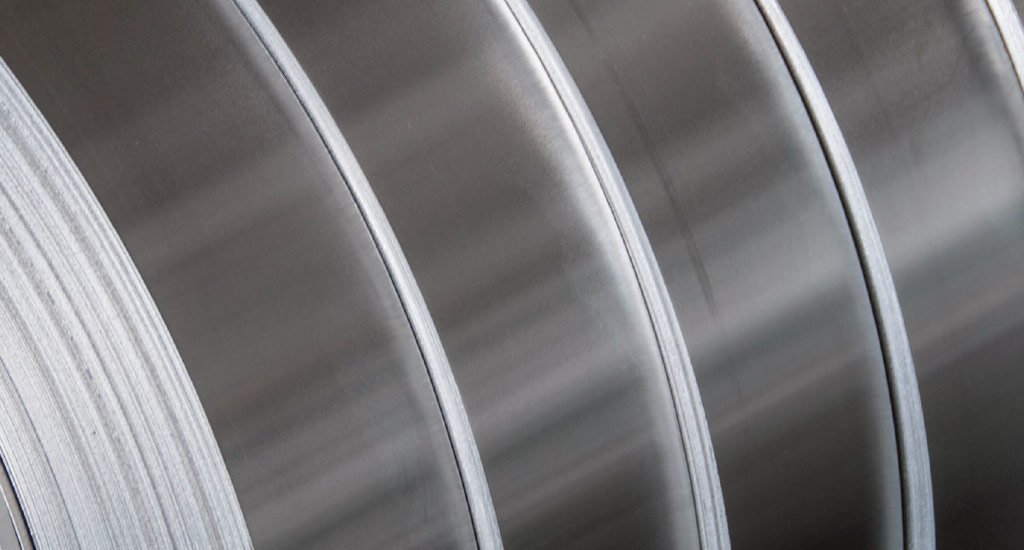
What Are the Material Characteristics of Nickel‑Iron Alloys?
936 Alloy (Alloy 36 Invar®, UNS K93600)
With a nominal 36% nickel content, this alloy offers exceptionally low thermal expansion up to 400°F (204°C). It is ideal for applications requiring high dimensional stability, precision components, and reliable glass‑to‑metal sealing.
942 Alloy (Alloy 42, UNS K94100)
Containing approximately 41% nickel, this alloy is engineered for compatibility with both hard and soft glass. It is widely used in lead frames, electronic packaging, and other hermetic sealing applications.
946 Alloy (UNS K94600)
With a nominal 46% nickel composition, this alloy is commonly used for terminal bands on vitreous‑enameled resistors and in electronic components where controlled thermal expansion is essential.
948 Alloy (UNS K94800)
Containing 47.5% nickel, this alloy is suited for electrical and electronic applications requiring stable thermal properties and consistent performance.
952 Alloy (Alloy 52, UNS N14052)
With a nominal 50.5% nickel content, this alloy provides highly consistent thermal expansion up to 1049°F (565°C). It is well suited for sealing with specialized soft glasses in high‑reliability electronic and hermetic applications.
Applications for Nickel‑Iron Sealing Materials
Nickel‑Iron alloys are used in high‑reliability electronic applications such as hermetically sealed integrated circuits, lead frames,
reed switch systems, sensors, and electrical interconnections, where dimensional stability and consistent sealing performance are required.
- Electronics & Data Infrastructure: Lead frames for AI data centers, electronic/IC packages, and sensors.
- Power & Electrical Systems: Transformers, switch‑gear connections, and reed switch systems.
- Glass‑to‑Metal Sealing: Hermetic seals, terminal bands, and enclosures.
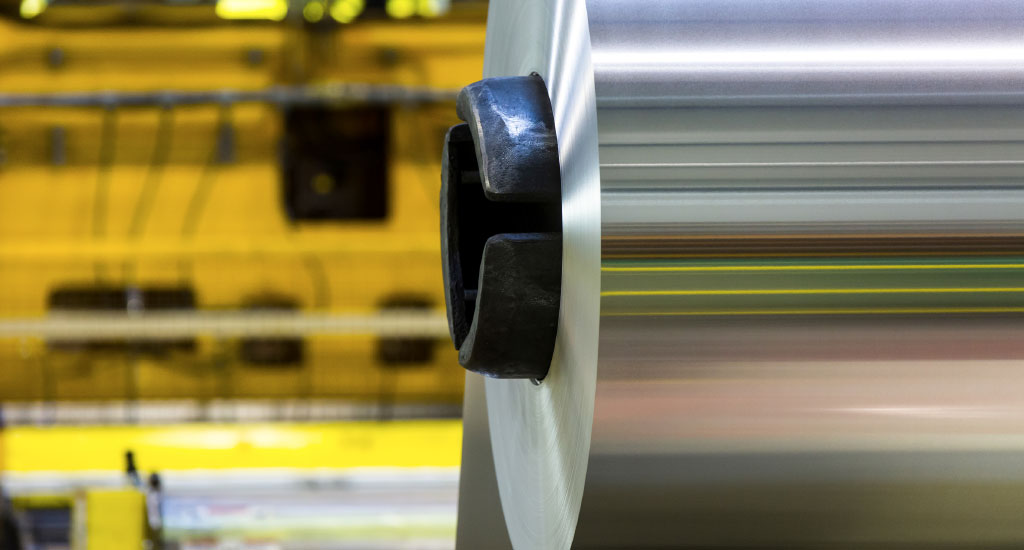
Why Choose Nickel‑Iron Materials from AMETEK Wallingford?
| Benefit |
How It Helps You |
| 65 Years of US‑Made Quality |
Mitigate import tariffs and duties, and global trade disruptions through U.S.-based operations. |
| Vertically Integrated Facilities |
Uniform standards and shared expertise across integrated U.S.-based facilities ensure the highest quality output at every stage. |
| Short Lead Times |
Fully vertically integrated U.S.-based manufacturing enables fast, dependable delivery. |
| Custom Alloys |
NiFe chemistries can be precisely tailored to meet specific thermal expansion, performance, and application requirements. |
| Custom Sizes |
Thicknesses from 0.002" to 0.080" and widths up to 14 in (355.6 mm). |
What is the Chemical Composition of Nickel‑Iron Alloys?
| Alloy |
Nickel (Ni) |
Manganese (Mn) |
Carbon (C) |
Iron (Fe) |
Other Impurities |
| 936 |
36.0 |
0.1 |
0.005 |
Balance |
<0.4 |
| 942 |
41.0 |
0.2 |
0.005 |
Balance |
<0.4 |
| 946 |
46.0 |
0.2 |
0.005 |
Balance |
<0.4 |
| 948 |
47.5 |
0.2 |
0.005 |
Balance |
<0.4 |
| 952 |
50.5 |
0.2 |
0.005 |
Balance |
<0.4 |
What Are the Mechanical Properties of Nickel‑Iron Alloys?
| Alloy |
Tensile Strength (psi) |
Yield Strength (psi) |
Elongation (%) |
Hardness (Vickers) |
Elastic Modulus (psi x 106) |
| 936 |
65,000 |
38,000 |
35 |
130 |
20.5 |
| 942 |
68,000 |
36,000 |
30 |
125-140 |
21 |
| 946 |
70,000 |
32,000 |
30-35 |
120-135 |
23 |
| 948 |
71,000 |
34,000 |
30-35 |
120-135 |
23 |
| 952 |
72,000 |
36,000 |
35 |
120-130 |
24 |
Frequently Asked Questions About Nickel‑Iron Alloys